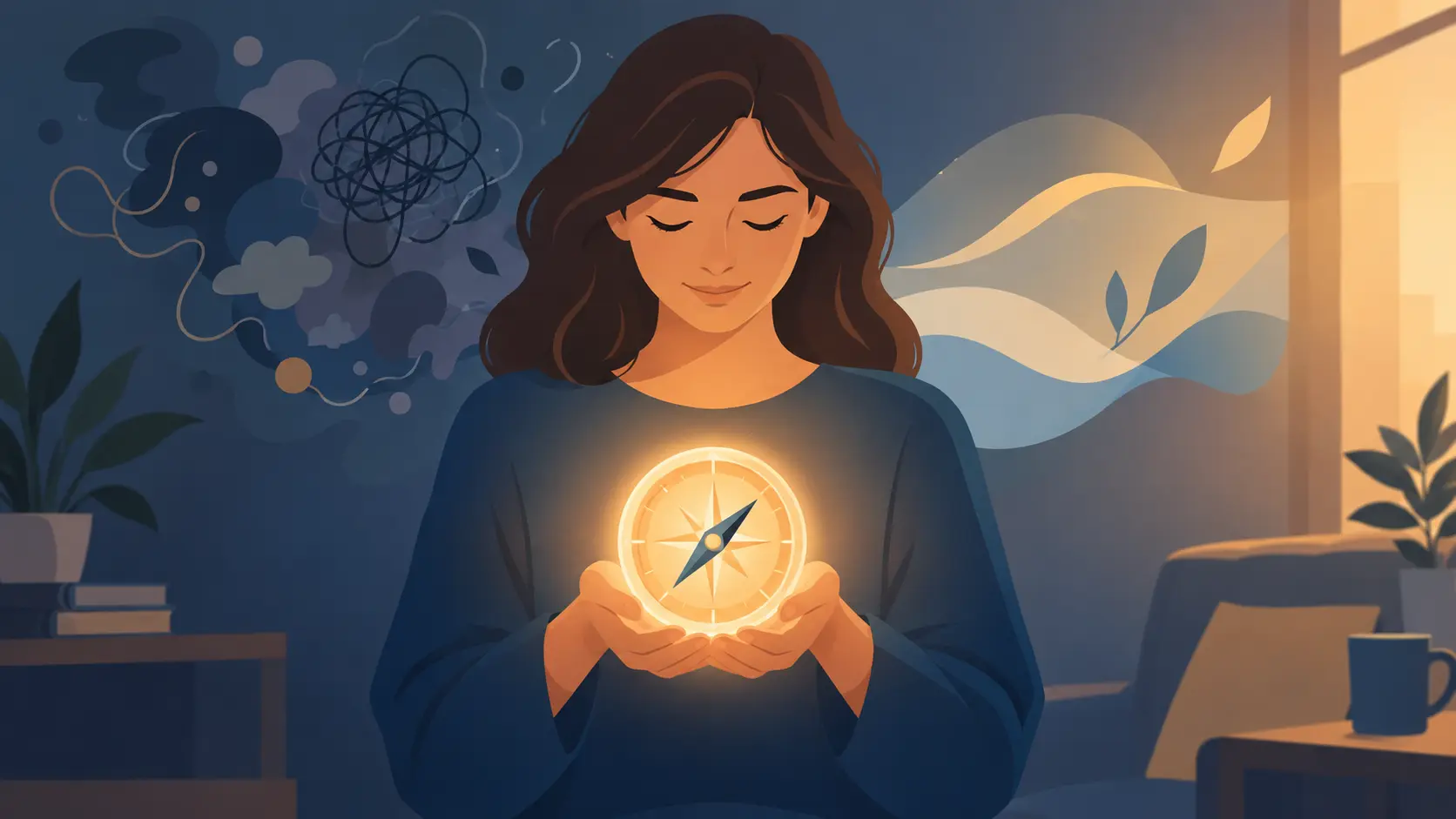
Why does "tomorrow" frighten us so much? And why does uncertainty so often leave us paralysed in the present?
Anxiety is, in its psychological essence, an exhausting anticipation of the future. It is the mind trying to solve today problems that only belong to tomorrow, under the illusion that, if it can predict or control what lies ahead, it will finally be safe.
However, the greatest freedom is born the moment we realise that the unknown is not a threat, but rather the only space where new possibilities can fit.
In my clinical practice, I see people every day who are trapped in this exhausting attempt to guess the future. This anxiety shows up in simple, everyday moments: in sleepless nights spent rehearsing scenarios for the next day, in paralysing hesitation when making a professional decision, or in the constant need for reassurance before a personal choice. Anxiety makes us believe that we can only act if we have absolute certainty.
Think about it: how often do we set off on a journey without knowing every bend in the road beforehand? We don't need to know everything about the destination. We only need to trust our ability to use the GPS, to handle the unexpected and to draw on the resources we carry with us in the present.
The Limit of Certainty
The certainty that anxiety demands so insistently is deeply fleeting. What we consider guaranteed today — will it still be so tomorrow?
The limit of certainty is the very unpredictability of life. When we stop demanding that tomorrow gives us guarantees, we free ourselves to make the journey today — even when the horizon is still all we can see.
How can psychological support help you manage anxiety better?
In a psychology session, my role is not to give you certainty about tomorrow or to predict the future — that would only keep feeding the illusion of control. The aim of the therapeutic process is to help you build and strengthen your own inner GPS, in a safe, empathetic and scientifically rigorous space.
In our sessions, we will work together to:
- • Break the cycles of anxiety and rumination about the future;
- • Map your inner resources for emotional regulation and self-compassion;
- • Learn to tolerate uncertainty, so you can make decisions and take concrete steps in the present again;
- • Develop practical strategies to manage anxiety, doubt and emotional overload.
If you feel that anxiety and the need for control are keeping you from moving forward, remember that you don't have to walk this path alone.
Book your online session: let's map your resources, build new ones and act today